
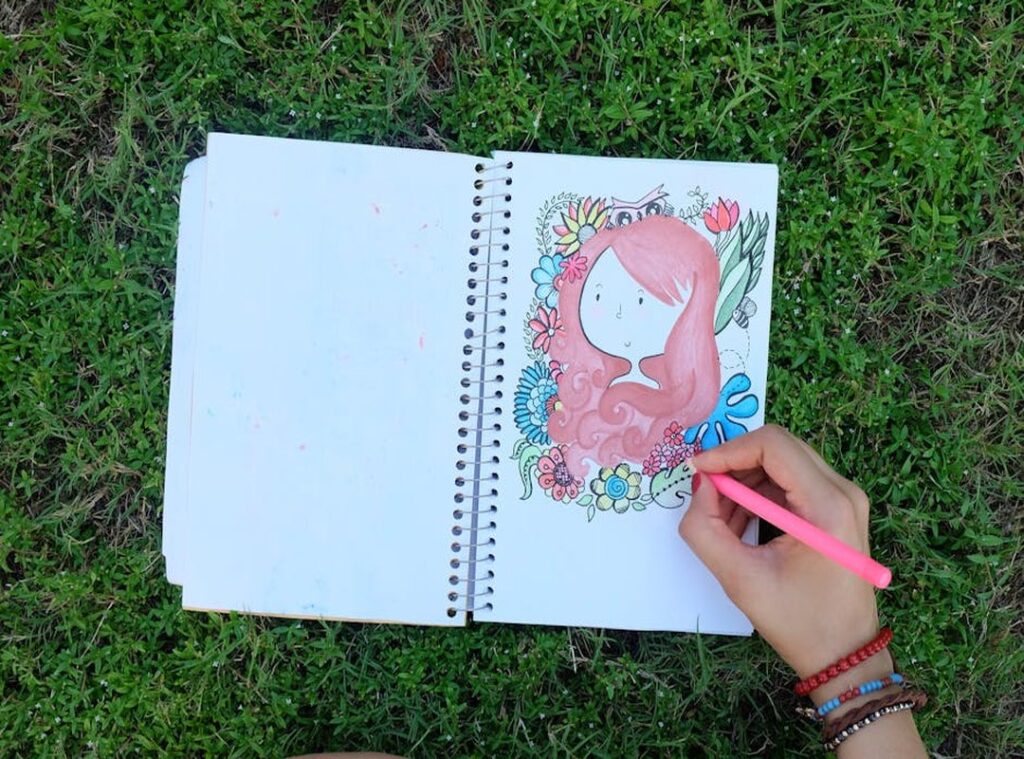
Drawing can be a lot of fun, but it’s not always easy to get started. Many girls are interested in it but find it tough to improve. I’ve been there too.
I know the struggle of wanting to draw something beautiful and feeling like you just can’t. But here’s the thing: with the right tips, anyone can get better at drawing. helppoja piirustus ideoita tytöille is all about that.
This guide is packed with practical, step-by-step advice. It’s designed to help you enhance your artistic skills, no matter where you’re starting from.
So, if you’re ready to take your drawing to the next level, let’s dive in. Are you ready?
Essential Materials for Drawing
When you start drawing, having the right tools can make all the difference. Basic Tools include pencils, erasers, and sketchbooks, and these are your go-to essentials.
- Pencils (preferably a range of hardness like 2B, 4B, and 6B)
- Erasers (kneaded and vinyl erasers)
- Sketchbooks (with different paper weights)
Choosing the right tools is key. For detailed work, a harder pencil like 2H or HB works well. If you’re into shading and bold lines, go for softer pencils like 4B or 6B.
Paper matters too. Smooth paper is great for fine details, while rougher textures add character to sketches.
If you’re just starting out, budget-friendly options are a must. Look for student-grade materials. They’re often just as good and won’t break the bank.
Pro tip: Check out local art supply stores for discounts. Sometimes they have sales on bulk purchases.
Remember, the best way to find what works for you is to experiment. Try different combinations and see what feels right.
Oh, and if you’re looking for some helppoja piirustus ideoita tytöille, there are plenty of online tutorials and books that can spark your creativity.
The Building Blocks: Understanding Basic Shapes
Drawing is all about starting with the basics. Circles, squares, and triangles—these are your building blocks.
You might think, “I can’t draw.” But trust me, if you can make a circle, a square, and a triangle, you’re already halfway there.
Combining Shapes
Once you’ve got the hang of basic shapes, it’s time to combine them. You can create a house by putting a triangle on top of a square. Or a tree by stacking circles.
It’s like playing with Lego, but on paper. Simple, right?
Practice Exercises
Now, let’s get into some practice, and start with drawing a bunch of circles. Then move on to squares.
And finally, triangles.
Helppoja piirustus ideoita tytöille—that’s Finnish for “easy drawing ideas for girls,” but honestly, these exercises work for everyone.
Draw a face using only circles, and or a robot with squares and rectangles. How about a mountain range with triangles?
The key is to keep it simple, and don’t worry about making everything perfect. Just focus on getting comfortable with the shapes.
By practicing these basic shapes, you’ll build a strong foundation. And before you know it, you’ll be combining them to create more complex and interesting forms.
Mastering Proportions and Perspective
When it comes to drawing, getting proportions right is key. Especially when you’re drawing people and animals. It’s the difference between a sketch that looks off and one that feels real.
Start with basic shapes. Break down the figure into simple forms like circles, squares, and triangles. This makes it easier to see where things go wrong.
One common mistake is making the head too big or too small. It throws everything off. A good rule of thumb is to make the head about 1/7th of the total height of the body.
Perspective can be tricky, but it’s worth the effort. One-point and two-point perspective are your best friends for adding depth and realism. One-point perspective is great for scenes with a single vanishing point, like a road stretching into the distance.
Two-point perspective works well for buildings and rooms, giving them a more three-dimensional feel.
Don’t forget to practice. The more you draw, the better you get. Try some helppoja piirustus ideoita tytöille to keep it fun and engaging.
Common mistakes in perspective include not aligning lines correctly and not using the right vanishing points. It’s frustrating, but fixable. Take a step back, look at your drawing, and adjust as needed.
In the end, it’s all about practice and patience. Keep at it. You’ll see your skills improve, and your drawings will start to come alive.
Adding Details and Textures

When it comes to drawing, small details can make a big difference. Adding those little touches can transform a simple sketch into something that really pops.
One of the first things I tell my students in Camden is to pay attention to the eyes. A well-drawn eye can bring a character to life. Try adding a tiny highlight or a subtle shadow.
It’s amazing how much depth that can add.
Texture techniques are just as important, and for hair, use quick, light strokes. For fur, go for short, dense lines.
Fabric, and vary your line thickness and direction. It’s all about capturing the feel of the material.
Practice makes perfect. Set aside some time each day to work on different textures. Draw a piece of fabric, then try to replicate its texture.
Do the same with hair, fur, and even skin. Consistency is key.
Helppoja piirustus ideoita tytöille. Simple ideas can be a great starting point. Think about everyday objects and scenes.
A cat curled up on a couch, a tree in the park, or a cup of coffee on a table. These are all great for practicing textures and details.
Remember, the more you practice, the better you’ll get. And if you’re looking for some inspiration, check out how emerging technologies are reshaping startup landscapes. You might find some new tools and techniques that can help you take your drawings to the next level.
Shading Basics: How to Use Shading to Add Depth and Dimension
Shading is a game-changer for any drawing. It can turn a flat image into something that looks real and three-dimensional. The key is to understand light and shadow.
When you shade, think about where the light is coming from. This will help you decide which areas should be darker and which should be lighter.
Color Theory: Understanding Color Theory and How to Use Colors Effectively
Color theory isn’t just for artists; it’s for anyone who wants to make their drawings pop. Knowing how colors interact can help you create more vibrant and harmonious images. For example, complementary colors (like red and green) can make each other stand out.
Using a color wheel can help you pick the right colors for your project.
Tools for Shading and Coloring: Pencils, Markers, and Other Tools
The right tools can make all the difference. Pencils are great for subtle shading and blending. Markers, on the other hand, offer bold, vibrant colors.
Don’t forget about pastels and colored pencils too. Each tool has its strengths, so experiment to find what works best for you.
If you’re looking for some helppoja piirustus ideoita tytöille, start with simple shapes and gradually add more details. This way, you can focus on perfecting your shading and coloring techniques without getting overwhelmed by complex designs.
Remember, practice makes perfect. The more you experiment with different shading and coloring techniques, the better you’ll get. So, grab your tools and start creating!
Drawing Popular Subjects
Drawing can be a real pain sometimes, especially when you’re trying to get those proportions right. People and Faces: Tips for drawing realistic and stylized faces and figures. It’s frustrating when you spend hours on a portrait, only to have it look like a Picasso gone wrong.
Animals: How to draw a variety of animals, from cute and simple to detailed and realistic. Have you ever tried to draw a cat and ended up with something that looks more like a potato with ears? Yeah, I’ve been there too.
Landscapes: Techniques for drawing beautiful landscapes and natural scenes. Sometimes, you just want to capture the beauty of a sunset, but your trees end up looking like lollipops.
Helppoja piirustus ideoita tytöille can be a great starting point if you’re feeling stuck. Simple ideas can help you build confidence and improve your skills over time.
Remember, practice makes perfect. Or at least, it makes you less frustrated.
Embrace Your Creative Journey
The article covers a variety of drawing tips and techniques, from basic sketching to more advanced shading methods. It’s important to practice these skills regularly. Experiment with different styles and subjects to find what truly inspires you. helppoja piirustus ideoita tytöille can be a great starting point for beginners.
Drawing is not just about the final product; it’s also about the joy and satisfaction that comes from the creative process. With persistence and a willingness to learn, you can achieve wonderful results.